

December 02, 2025
Today, Ukraine’s real estate market has not yet returned to its pre-war volumes; however, it remains alive, continues to move forward, and is gradually shifting to a different model — one that is more conscious, higher in quality, and people-centred. This was stated by RIEL CEO Rostyslav Melnyk during INVEST FORUM, dedicated to the dynamics of the residential sector in 2025-2026.
The discussion began with a direct question from the moderator Dmytro Karpilovskyi, founder of the investor community UkrInvestClub: “Is the market flying up or down? On the rise or on the edge of the abyss?”
The response was: “I hope the market has stopped falling into the abyss. Compared to the pre-war period, volumes are lower, but signs of recovery are already visible.”
According to Melnyk, most developers have returned to work, but growth rates vary significantly by region: “More than 90% of Lviv developers have informed buyers about postponed completion dates — this is the reality of a market that is recovering while operating under the pressure of new challenges. Nevertheless, construction continues. Lviv is maintaining around 70% of its pre-war volume; Zakarpattia and Ivano-Frankivsk region have grown severalfold. Kyiv is more cautious, at around 25-30%, but there is forward movement.”

A key change of recent years is the emergence of new criteria for choosing housing.
“People no longer want just square metres — they want a place to live. Infrastructure, services, and the ability to live comfortably within a well-designed environment are no longer a bonus; they are a basic expectation.”
A separate challenge is not the construction of buildings itself, but their management after completion:
“In 90% of new developments, people face not construction-related problems, but disorder in building management and existing infrastructure. Today, very few know how to manage such assets — in a high-quality, systematic, long-term way. Moreover, this issue has not been resolved at the legislative level.”
This, in turn, shapes the direction of competition — not by the number of square metres delivered, but by the quality of the environment:
“A building without infrastructure can exist in Kyiv — but it will be competing with projects outside the city, where price is the deciding factor. This is a completely different model, a different buyer, and entirely different expectations.”
Participants of the panel at Invest Forum also emphasised that a developer must embed a management model from the very start of a project, rather than trying to invent one after residents move in.
For his part, Vitalii Melnyk, Vice President of UDP, drew attention to the difference between the capital and the regions. According to him, sales in the Kyiv suburbs are noticeably more active, primarily due to a lower price per square metre:
“Kyiv region sells more than Kyiv itself. For internally displaced persons and those choosing housing pragmatically, price remains the key factor. At the same time, I am convinced that the capital has the greatest potential: capital, the economy, and opportunities are concentrated here. However, today’s risks still restrain investors from making decisive moves.”
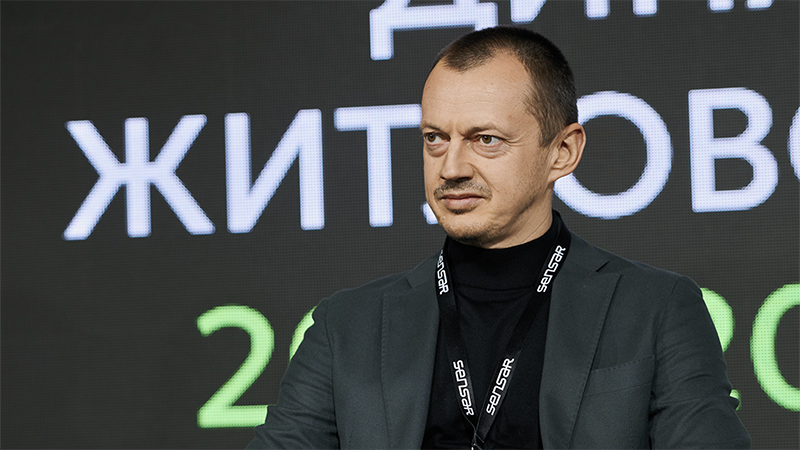
Mark Marchenko, CEO of SENSAR Development, continued the discussion by highlighting even more contrasting transaction dynamics: “We have 45 deals in Uzhhorod, 15-20 in Kyiv, and only one in Zaporizhzhia. This is a matter of risk geography and where demand naturally flows.”
He also shared an insightful observation about the preferences of internally displaced buyers. While price may be decisive for buyers from regional areas, for people moving from large cities to smaller towns, the quality of the environment and the availability of familiar infrastructure play a crucial role. A small residential complex is physically unable to provide the range of services people are accustomed to in cities such as Kharkiv or Dnipro. That is why the company spent more than two years designing a project that succeeded in attracting Silpo, the first SportLife in Zakarpattia, McDonald’s, as well as a hospital and a school. According to Marchenko, this very approach proved effective and became a magnet for demand.
Another important focus of the discussion was how buyer preferences are changing. Market priorities are gradually shifting: whereas panoramic apartments on higher floors used to be the most popular, an increasing number of people are now choosing homes closer to the ground. The moderator summed it up with a simple question: “What is more relevant today — high-rise buildings or low-rise development?”
The answer was not straightforward, as both formats have their own economic logic. Low-rise projects require lower initial investment and can be completed more quickly, while high-rise buildings benefit from a lower cost per square metre. This is why RIEL in Kyiv applies a mixed development model in new residential complexes — from 8 to 25 storeys — combining financial feasibility with different demand scenarios.
In closing, the panel moderator Dmytro Karpilovskyi summarised the discussion succinctly yet precisely: “One investment piece of advice we can certainly give is this: invest a lot of time in understanding before you invest a lot of money.”


