

July 29, 2025
A bed with warm, clean sheets, the smell of mom's pillow, or the soft light from a nightlight—all these images are not only childhood memories, but also a sense of security in our own home. As adults, we subconsciously seek this security and recreate it for our children, because we understand the depth of the space we call “home.”
Why do children need not just a home, but a “fortress”? What role does physical space play in shaping a sense of security? And how can you choose a home where parents are a source of support and children are confident? We discuss these questions in this article from Channel 24.
What role does a sense of security play in a child's life?
According to research by the Harvard Center for Child Development, the emotional security that a child feels, especially when in their own room filled with love and comfort, is directly related to successful socialization in later life.
At the same time, the Preschool Development Platform adds that a child's full development is impossible without a sense of security. The fact is that a child begins to explore the world in a safe environment, because then they do not feel fear and trust their loved ones.
And we are talking not only about relationships with parents, but also about the physical environment. This leads us to think that the organization of the living space where a child lives is extremely important.
For example, well-designed lighting in a residential complex creates a sense of security, as there are no blind spots. In addition, you will not encounter strangers in the closed courtyard of a residential complex, and the absence of cars will allow children to play without risk.
How does architecture shape the feeling of protection?
In order for children to feel comfortable, calm, and confident in their space, the architecture of the residential complex must be “enveloping.” The fact is that such minor details as the shape of buildings, colors, or even materials affect a person's emotional state.
The Lviv Father residential complex from the developer RIEL is an example of a home that embodies the concept of a “family fortress.” Even the name of the complex emphasizes this: like a father, it is associated with protection and reliability.
The complex belongs to Riel Family Style, a format within the comfort class. Spacious apartments, safe courtyards without cars, and “everything nearby” infrastructure all create a comfortable living environment.
In addition, the Father residential complex is located quite close to the historic city center. It has convenient transport links and well-thought-out infrastructure, as if it were a childhood home.
Key architectural solutions for family comfort provided in the Father residential complex:
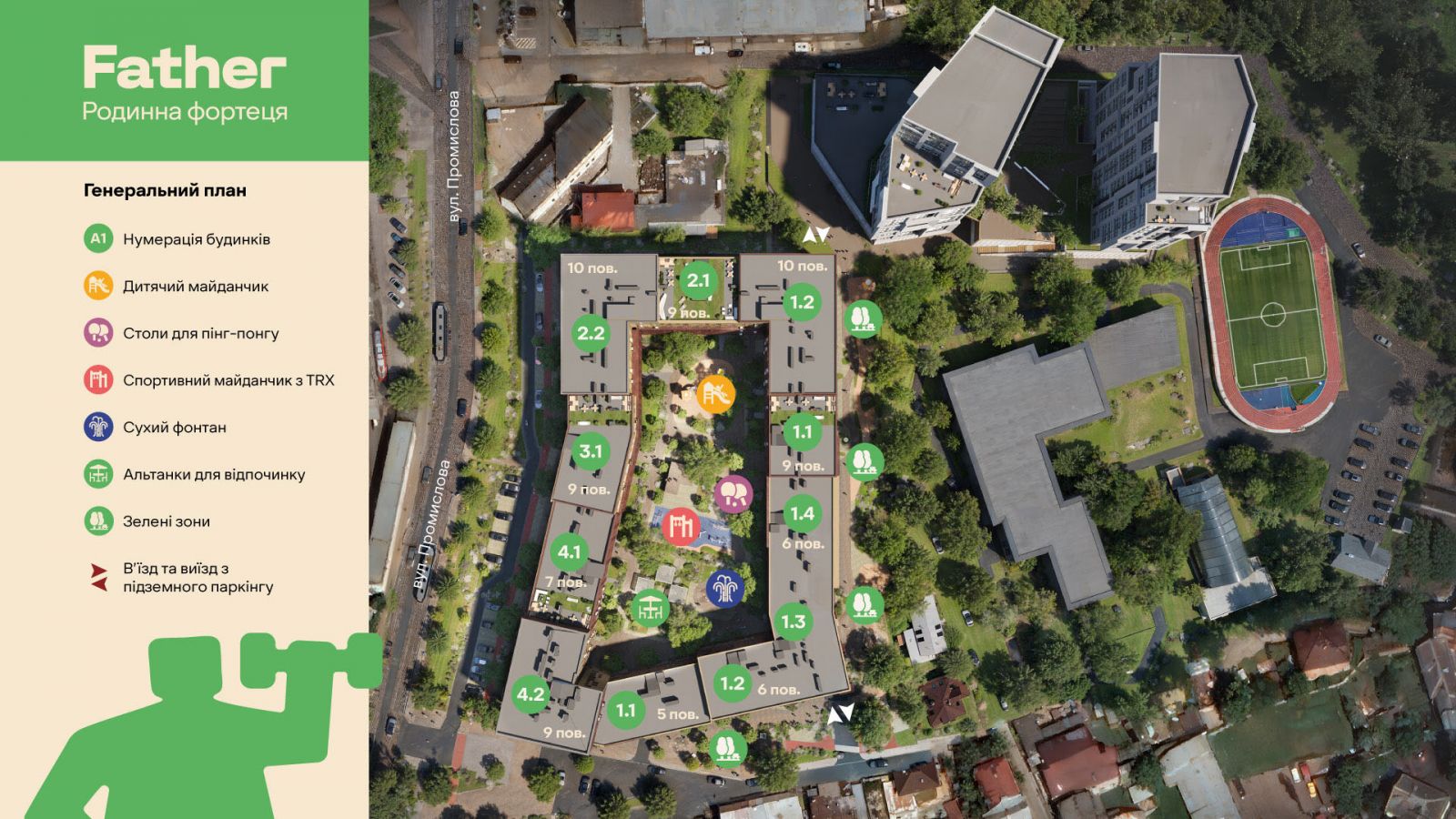
- The buildings in the residential complex surround the courtyard as if it were a “quiet harbor.”
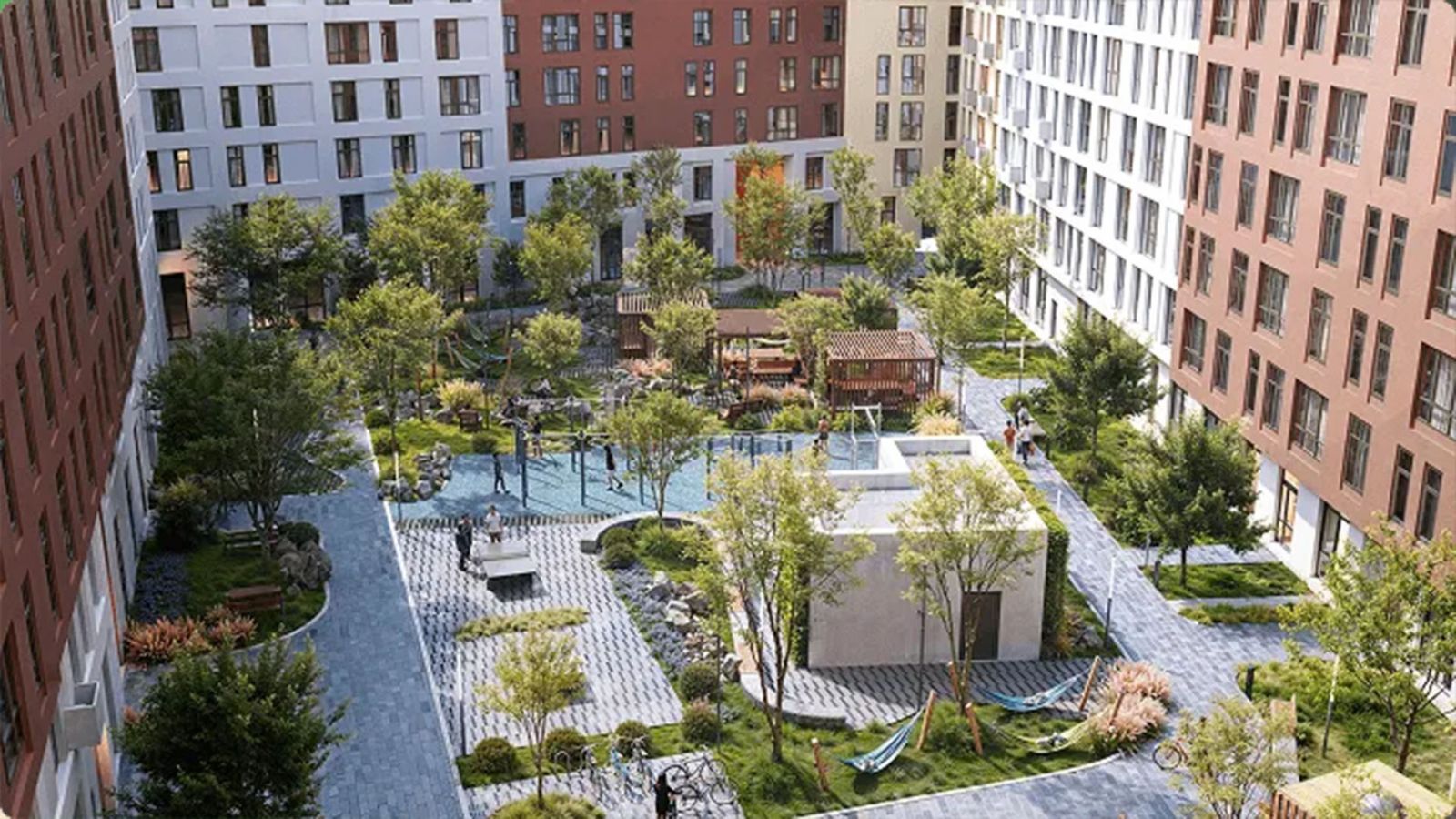
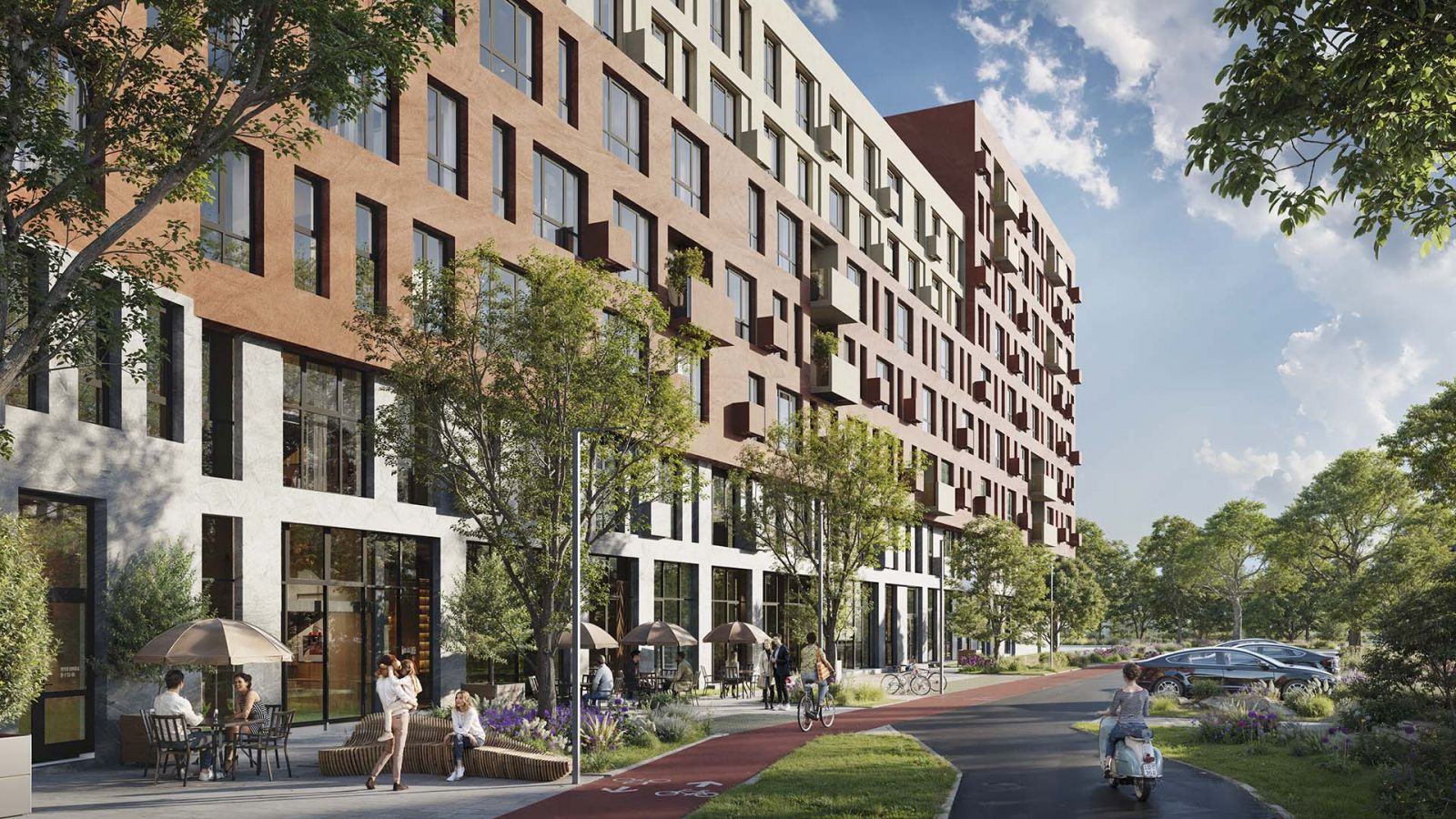
- At the same time, the facades have warm and restrained colors so as not to cause anxiety.
- Playgrounds, on the other hand, are not just slides and sandboxes, but spaces where imagination comes to life. They resemble fortresses with trees and natural stone.
How does Father Residential Complex support daily family rituals?
Father Residential Complex was created not just as a place to live, but as an environment where family is the main value. Here, the space is designed for daily family rituals: shared breakfasts, leisurely walks, interesting games, and more.
Everything here is arranged so that families can live at their own pace:
- Gazebos for relaxation and wooden street furniture—all of this has been arranged based on the principles of coziness and emotional comfort.
- The Father residential complex will have a coffee shop—a place for breaks and meetings, even if the day has been difficult.
- There is also a children's room—a space where children can play safely while their parents relax or work.
- And details such as rooms with changing tables and a stroller room are important little things for families with small children.
Father Residential Complex is also a home where parents find support
We often talk about the needs of children, but forget about those who raise them—their parents. After all, in order to be a source of support, you also need something to lean on.
That is why Father Residential Complex offers parents their own “fortress.”
- Neighborhood of like-minded people: communities are formed in the complex, where it is easier to make friends and raise children together.
- Logistical convenience: everything you need is nearby, which reduces logistical chaos and frees up time. For example, a coworking space where you can work conveniently close to home, or a sports ground where you can relax and unwind.
So, where there is attention to detail, a feeling of home is born. For children, it is a space of memories, first achievements, and love, and for parents, it is a support that they not only give but also receive.
Therefore, “my home is my castle” for the Father residential complex is not an exaggeration but a well-thought-out decision, because when you return home, it is so important to be emotionally fulfilled.


